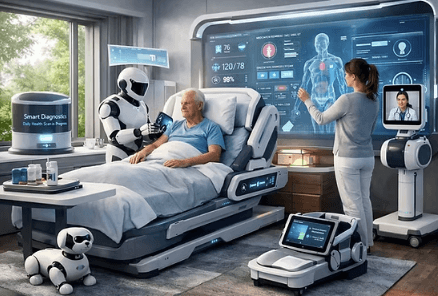

The future of smart devices in healthcare hinges on principled design and strict privacy. Systems must be interoperable, with standardized data streams that support remote monitoring and integrated workflows. Independent audits and verifiable standards are needed to maintain trust and limit unintended effects. Transitioning care to homes will require disciplined clinician onboarding and robust device calibration. Governance must be transparent, yet the path forward remains uncertain, inviting scrutiny about what is preserved and what may be lost.
The Future of Smart Devices in Healthcare
A detached assessment notes privacy by design and data ethics as foundational, not optional; without principled safeguards, gains risk erosion of autonomy, trust, and freedom.
Critical scrutiny remains essential for responsible progress.
How Remote Monitoring and Data Integration Will Work in Practice
Remote monitoring and data integration will unfold through standardized data streams, interoperable platforms, and composable workflows that bridge patient devices, electronic health records, and clinicians’ decision support tools.
The approach promises ethics governance, data standardization, and interoperability security, while preserving device reliability.
Patient empowerment and clinician analytics shape adoption, yet skepticism remains about integration complexity, governance consistency, and durable, user-centered benefits.
Evaluating Safety, Privacy, and Interoperability Across Systems
The assessment remains skeptical of claims, emphasizing verifiable standards and independent auditing.
Privacy risks demand explicit controls and transparency; data sharing should be purpose-bound and auditable.
Interoperability hinges on common schemas and evolving regulations, not vendor promises, ensuring accountability and user autonomy.
From Clinics to Homes: Transforming Care Delivery and Clinician Workflows
From clinics to homes, care delivery is undergoing a structured shift that integrates remote monitoring, telepresence, and home-based diagnostics into existing workflows.
The transition demands disciplined clinician adaptation, balancing automation with oversight.
Patient onboarding processes must be standardized to ensure continuity, while device calibration remains critical to data validity.
Skepticism persists regarding interoperability, governance, and unintended consequences within evolving care ecosystems.
Freedom hinges on transparent, accountable implementation.
Frequently Asked Questions
How Soon Will Smart Devices Be Affordable for Most Patients?
Affordability for most patients remains uncertain; affordability trends show gradual price declines, but variability persists. Reimbursement models increasingly influence access, yet gaps endure. Skepticism persists about universal, rapid affordability, while freedom-minded readers seek transparent, patient-centered cost pathways.
What Are the Major Costs Beyond Device Purchase?
The major costs beyond device purchase include ongoing device maintenance and data storage, raising concerns about reliability, privacy, and long-term affordability. It is skeptical yet clear, as one might note—costs cluster like anchors on a sea of freedom.
How Will AI Interpret Data Without Clinician Input?
AI interprets data with limited clinician input, potentially compromising data ethics and patient autonomy; safeguards are essential. Skeptically, the approach must protect autonomy, ensure transparency, and enforce clear governance over algorithms guiding medical decisions and data use.
Will Devices Require Frequent Software Updates and Retraining?
Silence wears the mask of a clock; updates and retraining arrive like tides. Devices demand ongoing improvements, yet privacy and consent guard thresholds, demanding skepticism about autonomy, freedom, and the reliability of perpetual software cycles.
See also: What Is a Blockchain Explorer Used For?
How Do Devices Handle Data Ownership and Patient Consent?
Devices handle data ownership and patient consent by documenting explicit ownership terms, obtaining informed consent, and enforcing privacy safeguards; data sharing is limited, auditable, and reversible only with patient authorization, while skepticism remains about ongoing control and transparency.
Conclusion
In a world where devices speak in quiet, calibrated tones, healthcare edges toward a chorus of transparent intent. Privacy by design anchors every feature, like a lighthouse steadying a restless sea. Interoperability threads data into a coherent loom, yet skepticism remains: provenance, purpose, and audits must prove themselves repeatedly. From clinic to home, workflows untangle into humane rhythms, with guardrails bright as dawn. The vision endures only if trust, discipline, and disciplined governance outlast convenience.
