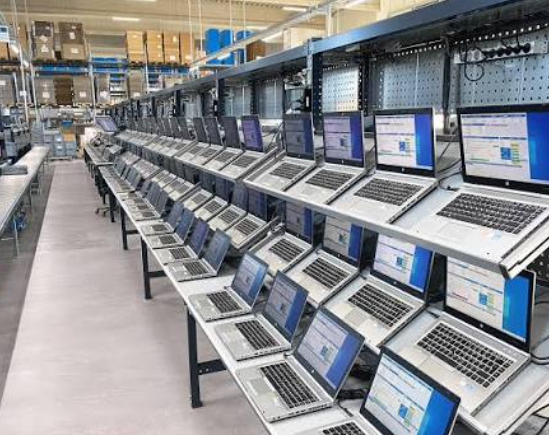

There is a category of computer that almost nobody buys new and almost everybody would be well served by. It is three or four years old, it was built to a business specification with a metal chassis and a serviceable design, it came off a corporate refresh cycle in working order, and it costs a fraction of a comparable new machine.
The market for this equipment is large and mostly invisible to consumers, who tend to assume that used technology means unreliable technology. The assumption is understandable and largely wrong, because the equipment coming out of corporate fleets is fundamentally different from the equipment coming out of households.
Refurbishment is the part of electronic recycling that produces the best environmental outcome by a wide margin, and it is also the part that most directly serves people who cannot afford new equipment. Understanding how it works explains why a refurbished machine is often a better purchase than a budget new one.
Why Corporate Equipment Refurbishes Well
Business hardware is specified differently from consumer hardware in ways that matter years later.
Chassis construction is typically metal or reinforced composite rather than thin plastic, because the equipment is expected to survive daily transport and a multi-year service life under a support contract.
Components are serviceable. Business machines generally allow battery replacement, memory upgrades, and drive swaps without specialized equipment, which is precisely what makes refurbishment economic.
Parts availability is longer. Manufacturers support business lines for extended periods, and the volume of identical units in the market means the secondary parts supply is deep.
Usage patterns are gentler than people assume. A machine that spent four years docked on a desk in a climate-controlled office has had an easier life than a two-year-old consumer laptop that lived in a backpack.
And they were replaced on schedule rather than on failure. The overwhelming majority of corporate equipment is retired because a policy said so, not because anything was wrong with it.
What Refurbishment Actually Involves
A serious refurbishment process is more thorough than most buyers realize.
Incoming equipment is tested functionally: display for dead pixels and backlight uniformity, keyboard and trackpad for response, ports individually, wireless and audio, and thermal behaviour under load.
Battery capacity is measured rather than estimated, and cells below a threshold are replaced. This single step is what separates a refurbished machine from a used one, because battery degradation is the most common reason a working laptop feels obsolete.
Storage is sanitized to a verified standard or replaced outright. Where drives are retained, verification matters, and where solid state drives are involved many refurbishers replace rather than clean because flash storage does not respond reliably to conventional erasure.
Cosmetic work follows: cleaning, keycap replacement, and in some operations chassis replacement for units with visible damage.
A fresh operating system is installed, drivers are updated, and the machine is tested again before it is graded and listed.
Grading is where transparency matters. A clear grading scale that describes cosmetic condition and specifies battery health lets a buyer make an informed choice, and its absence is a warning sign.
Who This Equipment Serves
The buyers are more varied than the stereotype suggests.
Small businesses equip teams for a fraction of new pricing, often with better hardware than a comparable new budget purchase would provide.
Schools and nonprofits stretch limited budgets, and matched batches of identical refurbished machines are considerably easier to support than assorted donations.
Students and households get durable equipment at accessible prices, which matters most for the people for whom a new machine is genuinely out of reach.
Charitable redistribution programs put refurbished equipment directly into the hands of people who would otherwise have none, which is where the social and environmental cases converge most clearly.
Developing markets absorb large volumes of functional secondary equipment, and this is legitimate reuse when the equipment genuinely works, as distinct from the export of broken material under a reuse label.
The Environmental Arithmetic
The case for refurbishment over recycling is not close.
Manufacturing accounts for the large majority of a device’s lifetime environmental footprint, commonly seventy to eighty percent for a laptop. Extending service life by three or four years through refurbishment defers an entire manufacturing cycle, including the mining, refining, and fabrication behind it.
Material recovery, by contrast, recovers a portion of the metals and loses much of the plastic and most of the trace elements. It is worth doing and it is not comparable.
The hierarchy that follows is simple: keep equipment working, then reuse it, then recover materials. Refurbishment sits in the middle position and delivers most of the benefit of the first.
Buying Refurbished Sensibly
A few checks separate a good purchase from a poor one.
Buy from an operation that grades and warrants its equipment rather than from an unspecified used listing. A warranty of six to twelve months is normal from a serious refurbisher and is the clearest signal of confidence.
Check the stated battery health rather than accepting a general assurance, since this is the component most likely to determine satisfaction.
Prefer business lines over consumer lines of the same age, because the build quality difference is substantial and the parts supply is better.
Confirm the machine will receive operating system and security updates for a reasonable period, since support horizons rather than hardware failure now determine the useful life of many devices.
Check that storage was sanitized or replaced, which is both a data question and an indicator of how carefully the operation works.
Why This Matters Beyond the Purchase
Every refurbished machine sold is a new machine not manufactured, which is the largest single environmental effect available in this category. It is also a machine that stayed out of a shredder for several more years, and a machine that put capable equipment in the hands of someone who needed it at a price they could pay.
That combination is unusual. Most environmental choices involve a trade-off against cost or convenience. This one generally runs in the same direction as both, which is a reasonable argument for looking at the secondary market before defaulting to new.
